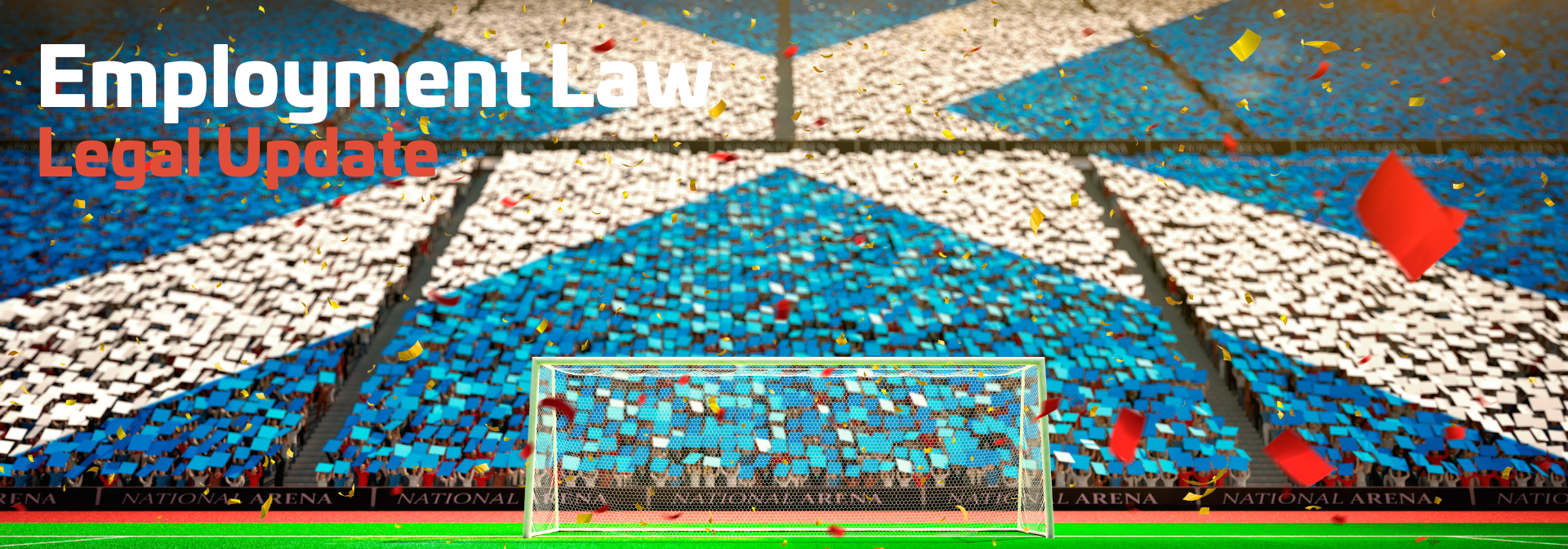
Many of the Scottish Engineering team were too young to remember the last time Scotland’s men’s national team qualified for the World Cup… That was until recently.
In a moment 28 years in the making (and, let’s be honest, bordering on the miraculous), Scotland will take to the pitch in Boston at 02:00 BST on Sunday 14 June to face Haiti. Amid the mounting excitement, First Minister John Swinney has even floated the idea of a national bank holiday on Monday 15 June.
Before the kilts come out and the face paint goes on, employers will need to check the small print in their contracts. Only employees whose contract promises “all public holidays” will automatically be entitled to the extra day off. If a contract simply lists a set number of annual leave days, there’s no legal requirement to grant Monday off. Of course, employers can still choose to join the celebrations and follow suit, but they’re under no obligation to do so, provided they comply with Working Time Regulations (currently 28 days’ annual leave).
That said, regardless of legal obligations, employers can safely expect a surge in annual leave requests.
What to do when everyone wants the same day off
With much of the country likely to stay up and watch the match, many organisations should brace themselves for a flood of annual leave requests for the following Monday. Whether it’s the practical souls trying to reset their sleep schedules, those needing time to recover from late-night festivities, or the eternal optimists hoping to extend the celebrations after a win (we admire the confidence), it’s going to be a popular date.
So how do you decide who gets it?
- First come, first served
Decide in advance how many staff are needed to keep the lights on, then approve requests in the order they arrive. Once that limit is reached, further requests can be declined. It may also be wise to build in a small buffer, just in case unforeseen absences or travel mishaps strike. - Leave it to chance
Alternatively, you could run a draw. Set a clear deadline for requests, then pull names from a hat for the lucky winners. Ideally, this process will be far quicker (and less dramatic) than FIFA’s group draws – and sadly, no medals for those selecting the names.
Legal obligation
Employers should remember that approved annual leave cannot be cancelled unless there is a legitimate business need. Employees who already have the day booked off can’t have that leave revoked simply to enter them into a draw. Additionally, depending on how your annual leave year is structured, leave cannot be cancelled if doing so would prevent an employee from taking their full statutory entitlement.
In short: plan ahead, be fair, and may your staffing levels be stronger than Scotland’s defence.
Managing those that don’t show up or show up unfit to work
Of course, not everyone will take the sensible route of booking leave in advance. As with any major sporting event, some employees may simply not turn up on Monday morning, while others might arrive… let’s say, less than match‑fit. Employers should prepare for this possibility and ensure managers understand the correct process to follow.
If an employee fails to attend work without prior approval, this will generally fall under unauthorised absence. As with any potential misconduct, employers should follow their normal disciplinary procedure, ensuring the matter is investigated fairly and in line with company policy and procedure. It’s important to establish the facts before taking action, thoroughly investigating as an employee could have a genuine reason for their absence, even on the morning after a Scotland match.
Where an employee attends work under the influence of alcohol, or in a condition that makes them unsafe or unable to perform their duties, employers have both a legal and moral obligation to act. Under the Health and Safety at Work etc. Act 1974, employers must ensure a safe workplace, which includes addressing situations where an employee’s impairment poses a risk to themselves or others. If a manager has reasonable grounds to believe someone is unfit for work, they should investigate immediately as potential removal of the employee may be required. The time away from work may be recorded as unpaid leave, annual leave, or sickness absence depending on the circumstances, and company policy.
Any allegation that an employee has attended work drunk should be handled through a fair and reasonable investigation, following the organisation’s disciplinary process. Depending on the role and the severity of the impairment, particularly in safety‑critical environments, this could amount to misconduct or even gross misconduct. Consistency is key: whatever action you take should align with your existing policies on alcohol and substance misuse.
As the Final Whistle Blows
As Scotland prepares for its long‑awaited return to the World Cup stage, workplaces across the country are gearing up for the inevitable impact, late nights, tired mornings, last‑minute leave requests and, in some cases, employees who are not quite match‑ready. While the excitement is more than justified, employers still need to keep one eye on their operational needs and legal responsibilities. Clear communication, consistent decision‑making and a fair application of policies will help you navigate the post‑match chaos with confidence.
Whether you choose to embrace the moment with additional flexibility or stick firmly to contractual obligations, the key is to set expectations early and apply them evenly. Most issues can be avoided through proactive planning, but where absence or impairment does occur, following your usual procedures and ACAS guidance will keep you on safe ground.
Football may bring passion, unpredictability and the occasional miracle, but managing your workforce during major sporting events shouldn’t require the same level of suspense. With a bit of preparation and perhaps a touch of patience, you can keep your organisation running smoothly while still letting staff enjoy the occasion. And who knows? With Scotland back on the world stage, maybe this time the celebrations will last a little longer than Monday morning.